Many commentators and the public generally have been wondering in recent weeks given the disastrous absence of anything resembling leadership from the government why is that we do not have our own Obama on the horizon. I find it surprising that people like Vincent Browne forget so easily that we have a cabinet system of government that sits on top of a parliamentary system. For me the question is really an answer in search of an appropriate question. They start with Barack Obama as the answer and try to work back from there. It is a bit like wondering why you can’t have somebody with the foot skills of Pele playing in the front row of a rugby team.
The plain fact is that different sports favour different types of players. Different political systems favour different types of politicians, The US constitution provides for a strong executive presidency that has to work in tandem with equally strong legislature and justice systems. All of this exists on top a system of governors, Mayors and down to the local sheriff who are accompanied by state senates, city councils and so on. In other words their system is designed to have a strong executive which has the lead in setting the direction but which then has to work with a larger legislative body to work out the details.
In the US the primary system, this works by means of selecting the candidate with plurality of the votes, aids in the ready adoption of new ideas and different candidates. Choosing the candidate who has the most support rather the majority of support means that an idea can move up through the system more quickly. It is true it can also favour fads and even facilitates a movement towards the extremes of the ideological spectrum. Yet this too favours a wider range of choices being on offer to the electorate or at least that portion of the electorate that is inclined to get involved at the primary stage.
It is much later on when it comes to the general election that the candidate needs majority or close to majority support. In the general election, you as a voter are faced with a choice of either/or and you vote for the candidate you like most or dislike least, but is a straightforward piece of comparison shopping. The time to have picked and worked for your particular flavour of left or right wing candidate is the primary stage. When it comes to the general election, you put your differences with the winning candidate from your party aside to ensure that the party platform is in a position to be put into effect.
In our system the stage when such majority support is required in the candidate selection stage of the process but then the candidate does not require majority support in the election itself. In an election with multiple parties and multiple candidate the people when faced with a choice between candidate A from say a left wing perspective or candidate B who is proposes solutions from a right wing perspective, the voters more often than not simply chooses candidate C. Candidate C who doesn’t give any concrete proposals but does the best impression of just wanting to help.
This process which we must remember is driven by the voter leads to the denuding indeed complete absence of policy from candidates resumes, instead replaced by their captaincy of the local football or camogie team and their winning rosette for best in show. Avoiding policy distinctions during the election campaign naturally lead to a clustering around the centre ground by all the candidates. It is then doubly hard for the parties to forge strong ideological positions if their TDs have spent their political existence expressing in the strongest possible terms their support for happiness, goodness and that people should have jobs in a spirit of equality and fairness.
So you as a voter can pick candidate C safe in the knowledge that you didn’t have to commit or subscribe to any particular viewpoint of how anything is to be done. You were after all simply endorsing a general set of goals or aspirations. Yet politics in a participative democracy is meant to be about the people making fully realised choices not just in personnel who will man the ship of state but also as to the specifics of the direction; how do we get there, at what cost, what do we place a lower priority on and why do we make this choice. Instead in our system we (the electorate) tend to vote for someone who has articulated best that they share the same vague general goal as us and then we can tune out when it comes to talk about the details. So we have candidates who want to help, to achieve equality and fairness, to give a voice to local people and so on.
Furthermore this tendency, evidenced in both elected and prospective members of the Oireachtas, to sit around the middle ground suffocates and impedes the movement in the placement of that centre ground. We forget sometimes that the middle ground doesn’t stay in the same place nor is it meant to. The one time centre ground of Irish politics is no longer so popular.
In stark contrast to the US, our entire political and electoral system in Ireland appears designed for us to have candidates who are not the least bit radical or all that often concerned about the maddening detail of ‘How’ a goal is to be achieved. It is as if politics was merely about stating a goal aloud. After which all would simply be magicked into place. Even those few radical candidates who do struggle through the system have had to be the best local exponent of clientism possible. You think that Joe Higgins wasn’t getting medical cards or helping folks out through their travails with the planning process while he was working on his latest witty put down of evil capitalists and their ilk?
So in querying why we don’t have an Obama we should perhaps spare some time to be wondering about the system we have that has given us the people we do have rather than simply bemoaning the failure of the people in the system to behave like those in other systems. Fact is in Ireland (Republic 1948 edition) Obama wouldn’t have been elected to the local council not to mind the state senate or US senate because he wasn’t from the area! Not to mind how with all that education he’s just not in touch with the common man and he doesn’t come from a big enough family to go out canvassing for him, and all the internet stuff is great but he never called to the door and asked about our auntie Mae who has terrible trouble with her bunions.
(Also posted over on Slugger)
Showing posts with label sluggerotoole. Show all posts
Showing posts with label sluggerotoole. Show all posts
Sunday, January 18, 2009


Thursday, December 04, 2008
Are we seeing further evidence of corrosion in the FF base?
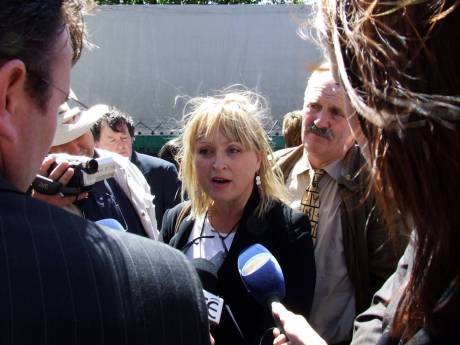 With the outburst from Cllr and 2007 General election Noreen Ryan of FF in Limerick against the mighty local political totem that is Minister for Defence Willie O’Dea, are we seeing the strain of the negative national mood beginning to tell? Many of those commenting are missing the local context in the timing of all this as the FF local selection interviews were talking place in Limerick over the last week or so. It may simply be that the new interview based and HQ driven selection process may not be proceeding as painlessly as had been hoped for. It was noted in the Limerick Leader recently with suitable expressions of disinterest in the process from local FF heavy hitters (in their own minds at least) such as Eddie (I could still get into the Dail) Wade and Jack (only a council seat makes me feel complete) Bourke. I think Wade said something closely along the lines that they could shove their interview process up a certain place and get a proctologist to examine their prostate while retrieving it. (this post is also over on sluggerotoole)
I strongly suspect that Noreen Ryan* has had her interview and picked up a definite vibe that she is not likely to be reselected. I particularly think her GE performance where she got barely 200 more votes than in the locals and she canvassed wearing sunglasses (was it the British Army that did the ad about the importance of making eye contact? Perhaps that is why she didn’t see it). That she should shoot her mouth off isn’t surprising, that the minister would retort by referring to her “as a person, utterly without credibility.” and continuing to say that “This is a grab for cheap publicity to conceal her utter inactivity and lack of performance as a councillor,”. Hmm....I can’t quite see how FF could have her on a ticket come next summer.
Fianna Fail ran 6 candidates, including cllr Ryam, in the 7 seat Castleconnell ward and they picked up 3 of the seats which was not a bad performance at all against the backdrop of the national picture. In fact it represented no change on the 1999 results. This time Labour and the Greens are making a really big push to gain a seat and with the demise of the PDs the future direction for cllr Brigid Teefy remains unclear. Might she now be looking for a home in the government party? And then we have to add in the likes of bright young lad Brian Stokes (who works with/for Peter Power TD and junior minster) who is bucking to get on the ticket in Castleconnell.
It is hard to see FF holding 4 out of 7 seats with the mood as it is now. This is moreover the case if they run too many candidates who fail to transfer amongst each other. The plain fact is FF as a party aren’t going to hold their seats by nominating imperious lads and ladies who lunch. They want them hungry and eager, and they want to have a tightly controlled panel of candidates. People who have a proven record of going off message and spending their time engaged in solo runs might well save their own seat but cost the party its other seats. While the national mood could change between now and election day, it is more likely that the government will choose to concentrate on the larger national picture and ensuring that they get things right so they can be returned to power in a few years rather than the immediate needs of cllrs. Of course, extrapolating too much from one ward is not without its dangers.
That said it may well be that this sort of radical surgery is needed if FF are to stave off the prospect that FG might pass them on. The story of the 2004 local and European was regarded at the time as being primarily about the increase in the SF vote. Yet in the longer term the vote retention and piecemeal seat gains by FG on what they had won in 1999 was of more significance. The 1999 results for FG were thought of at the time as a high water mark and later as something of a false dawn for the party in that those local successes didn’t prevent the tide going out in 2002. So sometimes it is not about the numbers of seats won but the overall context of the result.
It now seems that the FF brand and logo may even be more toxic than it was five years ago. I could tell from my own canvassing in the lead up to Christmas ’03 that many people were annoyed, disillusioned with the then FF/PD government and that they would take a hit come the summer but it was very unclear where the votes would go. In the end the votes spread out amongst the opposition parties in such a pattern as to please all concerned. The same could happen again, or any one of the opposition parties could take the lion’s share of the spoils. Only the campaigns and time will tell.
As for Cllr Ryan herself it is perhaps better for her to leave the party in a dramatic huff because she was standing up for ‘de local peeple’, run as an independent and if elected to return to the fold triumphant. With the FF logo more toxic than a tax demand on a poster it could be the only winning strategy for her and many others. No one ever said FFers were thick when it came to looking after themselves; it’s only when it comes to looking out for the rest of us that the brain tends to fail to engage.
* her site has been suspended, it would seem.
Monday, November 10, 2008
Think tank: Let’s all have a vote
I had an opinion type piece in the Sunday Times a few weeks back. It's a step up from my usual letter writing. I was mainly trying to talk about something that might be feasible rather than using the chance to have a crack at something that already exists. This is the slightly longer and somewhat less well edited version.
Think tank: Let’s all have a vote.
Are we seeing the emergence of a real democracy?
In the aftermath of the Lisbon Treaty campaign considerable attention has been devoted to the apparent disconnect between the electorate and the body politic. During the course of the campaign it appeared that the public were engaged in one type of conversation while the professional political class seemed to, many members of the public at least, to talk amongst themselves. The travelling road shows of the Forum on Europe and the Oireachtas Joint Committee on European Affairs, despite considerable expense to the public purse, failed utterly to engage the people drawing small crowds of political anoraks. And if I’m being completely honest I would have to include the likes of myself in that last grouping.
Yet the wider public were quite eager to talk about Lisbon or at least what they thought Lisbon was about. When they sought to do so, all too frequently, they were not so politely told to ‘Hauld your whisht’. Rather than be silent some decided to take their views elsewhere. They went on-line.
As European Commissioner Margot Wallström noted in a recent report the on-line discussion in Ireland had a tendency to be negative towards the treaty. Yet the EU and the state’s efforts in this area, again at cost to the taxpayer, did not provide for discussion not to mind dissension. Sites such as lisbontreaty.ie singularly failed to engage the voting public. They existed purely to carry a line to the public, much as posters and even television and radio ads to. No questions could be asked, in some cases not even the dead letterbox of the email us to contact.
In contrast there existed outside the state sponsored sector a veritable free for all. There the discourse was perhaps all too reflective of that taking place across the country. It mirrored in all its gaudy chaos the woolly thinking, messiness, unpredictability, bald inaccuracy, prejudices and tendency towards hyperbole, all the while exposing a broad spectrum of viewpoints both for and against the treaty. The general confusion in the public mind was manifest on-line long before it came to the notice of the mainstream media. That this was the case and that the mainstream media missed it is something they appear to be unable to forget not to mind forgive.
Though much of the discussion on-line has many, many flaws, it does demonstrate that we have at our fingertips the means to extend democratic involvement beyond what Americans term ‘the beltway’. We could if we so chose seek to move away from the stale binary mentality that sees people as either passive voters or active politicians. It’s a world of gray.
Pres. Jed Bartlet, “You know we forget sometimes, in all the talk about democracy, it's a Republic. People don't make the decisions; they choose the people who make the decisions.”
In a democracy, it’s not alone the citizen’s role to ensure that they are as informed as possible when casting their vote but it is their responsibility to continue to hold to account and to actively challenge those we elect to positions of power. This is meant to be an ongoing process not just saved for election time.
The ideals of democracy are rooted in the principle that all the people or 'demos' should be involved in both the discourse and decision making process. The parliamentary forms of representative democracy that we are used to were created in large part because of limitations in travel and communication that along with the lack of educational attainment meant that only a minority of citizens could gather in one place and understand the issues being debated. That is no longer the case.
Public participation in the political process as evidenced by voting, party membership and attendance at public meetings has entered a steady decline in recent decades. The focus in addressing this disengagement has primarily on making voting more accessible, simpler and easier. This is to address the wrong problem.
By and large voting is popular with the public. Participation by the Hoi Polloi in even in the most trivial reality shows such as Big Brother, X-factor, and Fáilte Towers demonstrates people have no problem with voting. Voting is not the problem; public participation in all that comes before a vote is cast is the crux of the issue.
What we need to do is extend the arena of the political discourse to embrace the general public. Our system of parliamentary procedure has changed little from the time of Gladstone and Parnell. A day in the chamber typically consists of ritualistic jousting with press releases. Most Deputies aren’t even present to listen to what others have to say. Genuine debate, a real contest of ideas or even limited constructive argument is substantially absent from the Dail.
The majority of the population have neither the time nor even the inclination to get involved but they could be afforded a significantly greater opportunity to be involved than at present. For example, why not allow citizens to submit parliamentary questions or to have ministers address their questions in committee? Or participate in the scrutiny of legislation? A broader spectrum of involvement would be possible especially to those who do not feel the party political format fits to their range of views. This is not to eliminate the final voting power of representatives but to instead embed it more directly as the penultimate steps in the decision making process. Those who vote must lead by convincing those who would support them that the course they will vote for is the correct one. The public similarly should vote for those whose ideas and votes reflect the course they believe to be the correct one.
In the mean time, online forums and group blogs such as politics.ie, irishelection.com and sluggerotoole.com appear to be hot housing embryonic communities that may evolve into more participative forms of democracy. If a potential transition is in prospect, it must be one that serves to underpin democracy rather than merely leading to a form of e-mob rule. It is all too easy to see technology means being used like the radio was by many in the 1930s as a means to whip up a crowd and for the leader of the mob to surf to power on this wave. Let a hundred thousand flowers bloom through experimentation. In due course the public will select what works best for them once the limitations in our broadband infrastructure are overcome.
This idea/exercise in thinking out loud is intended not a magic bullet to solve the problems democracy is faced with; rather it is a diet and exercise regime that can help it revive if there still exists the will that government of the people, by the people, for the people, shall not perish from the earth.
‘We have the technology, should we seek to rebuild democracy?’
Update: I mentioned e-mobs and a mate of mine asked if I was coining it. Little did I know that we were about to see the media overwhelmed by some e-mobs.
I think these chaps said it quite well.
Think tank: Let’s all have a vote.
Are we seeing the emergence of a real democracy?
In the aftermath of the Lisbon Treaty campaign considerable attention has been devoted to the apparent disconnect between the electorate and the body politic. During the course of the campaign it appeared that the public were engaged in one type of conversation while the professional political class seemed to, many members of the public at least, to talk amongst themselves. The travelling road shows of the Forum on Europe and the Oireachtas Joint Committee on European Affairs, despite considerable expense to the public purse, failed utterly to engage the people drawing small crowds of political anoraks. And if I’m being completely honest I would have to include the likes of myself in that last grouping.
Yet the wider public were quite eager to talk about Lisbon or at least what they thought Lisbon was about. When they sought to do so, all too frequently, they were not so politely told to ‘Hauld your whisht’. Rather than be silent some decided to take their views elsewhere. They went on-line.
As European Commissioner Margot Wallström noted in a recent report the on-line discussion in Ireland had a tendency to be negative towards the treaty. Yet the EU and the state’s efforts in this area, again at cost to the taxpayer, did not provide for discussion not to mind dissension. Sites such as lisbontreaty.ie singularly failed to engage the voting public. They existed purely to carry a line to the public, much as posters and even television and radio ads to. No questions could be asked, in some cases not even the dead letterbox of the email us to contact.
In contrast there existed outside the state sponsored sector a veritable free for all. There the discourse was perhaps all too reflective of that taking place across the country. It mirrored in all its gaudy chaos the woolly thinking, messiness, unpredictability, bald inaccuracy, prejudices and tendency towards hyperbole, all the while exposing a broad spectrum of viewpoints both for and against the treaty. The general confusion in the public mind was manifest on-line long before it came to the notice of the mainstream media. That this was the case and that the mainstream media missed it is something they appear to be unable to forget not to mind forgive.
Though much of the discussion on-line has many, many flaws, it does demonstrate that we have at our fingertips the means to extend democratic involvement beyond what Americans term ‘the beltway’. We could if we so chose seek to move away from the stale binary mentality that sees people as either passive voters or active politicians. It’s a world of gray.
Pres. Jed Bartlet, “You know we forget sometimes, in all the talk about democracy, it's a Republic. People don't make the decisions; they choose the people who make the decisions.”
In a democracy, it’s not alone the citizen’s role to ensure that they are as informed as possible when casting their vote but it is their responsibility to continue to hold to account and to actively challenge those we elect to positions of power. This is meant to be an ongoing process not just saved for election time.
The ideals of democracy are rooted in the principle that all the people or 'demos' should be involved in both the discourse and decision making process. The parliamentary forms of representative democracy that we are used to were created in large part because of limitations in travel and communication that along with the lack of educational attainment meant that only a minority of citizens could gather in one place and understand the issues being debated. That is no longer the case.
Public participation in the political process as evidenced by voting, party membership and attendance at public meetings has entered a steady decline in recent decades. The focus in addressing this disengagement has primarily on making voting more accessible, simpler and easier. This is to address the wrong problem.
By and large voting is popular with the public. Participation by the Hoi Polloi in even in the most trivial reality shows such as Big Brother, X-factor, and Fáilte Towers demonstrates people have no problem with voting. Voting is not the problem; public participation in all that comes before a vote is cast is the crux of the issue.
What we need to do is extend the arena of the political discourse to embrace the general public. Our system of parliamentary procedure has changed little from the time of Gladstone and Parnell. A day in the chamber typically consists of ritualistic jousting with press releases. Most Deputies aren’t even present to listen to what others have to say. Genuine debate, a real contest of ideas or even limited constructive argument is substantially absent from the Dail.
The majority of the population have neither the time nor even the inclination to get involved but they could be afforded a significantly greater opportunity to be involved than at present. For example, why not allow citizens to submit parliamentary questions or to have ministers address their questions in committee? Or participate in the scrutiny of legislation? A broader spectrum of involvement would be possible especially to those who do not feel the party political format fits to their range of views. This is not to eliminate the final voting power of representatives but to instead embed it more directly as the penultimate steps in the decision making process. Those who vote must lead by convincing those who would support them that the course they will vote for is the correct one. The public similarly should vote for those whose ideas and votes reflect the course they believe to be the correct one.
In the mean time, online forums and group blogs such as politics.ie, irishelection.com and sluggerotoole.com appear to be hot housing embryonic communities that may evolve into more participative forms of democracy. If a potential transition is in prospect, it must be one that serves to underpin democracy rather than merely leading to a form of e-mob rule. It is all too easy to see technology means being used like the radio was by many in the 1930s as a means to whip up a crowd and for the leader of the mob to surf to power on this wave. Let a hundred thousand flowers bloom through experimentation. In due course the public will select what works best for them once the limitations in our broadband infrastructure are overcome.
This idea/exercise in thinking out loud is intended not a magic bullet to solve the problems democracy is faced with; rather it is a diet and exercise regime that can help it revive if there still exists the will that government of the people, by the people, for the people, shall not perish from the earth.
‘We have the technology, should we seek to rebuild democracy?’
Update: I mentioned e-mobs and a mate of mine asked if I was coining it. Little did I know that we were about to see the media overwhelmed by some e-mobs.
I think these chaps said it quite well.
Subscribe to:
Posts (Atom)